Jev คืออะไร และต่างจาก LLM ตรงไหนWhat Jev is, and how it differs from an LLM
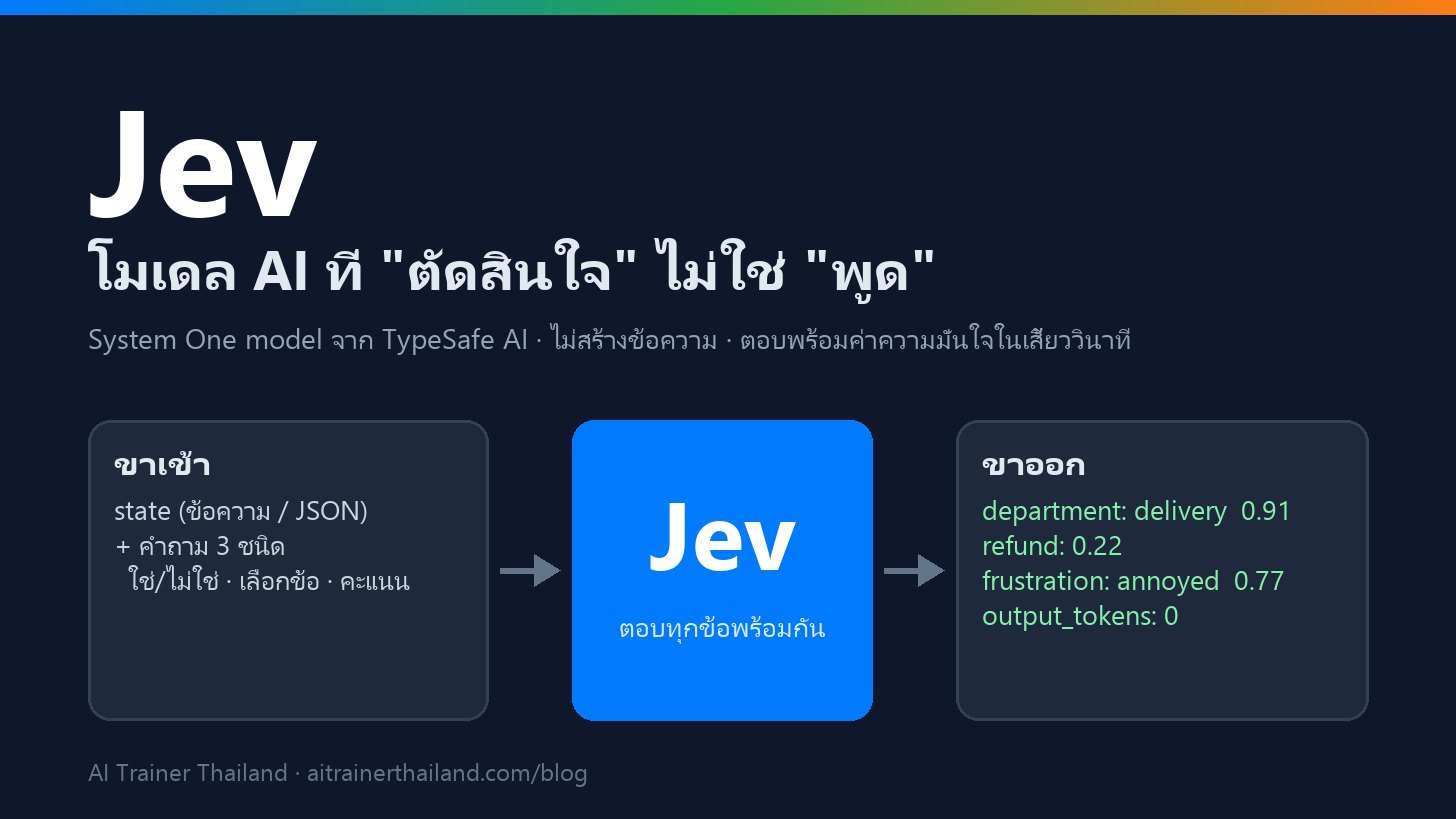
ผู้พัฒนาคือ TypeSafe AI ห้องแล็บที่เพิ่งเปิดตัวในเดือนกันยายน 2026 พร้อม Jev เป็นโมเดลสาธารณะตัวแรก ในคำของผู้พัฒนาเอง System One model คือ "โมเดลกลุ่มใหม่ที่สร้างมาเพื่อทำการตัดสินใจแบบมีโครงสร้างอย่างรวดเร็ว ที่ซอฟต์แวร์เอาไปใช้ได้โดยตรง" และ Jev คือ "ฟังก์ชันที่รับ state ไม่มีโครงสร้างเข้าไป แล้วคืนการตัดสินใจแบบมีชนิดพร้อมความน่าจะเป็นออกมา"The maker is TypeSafe AI, a lab that came out of stealth in September 2026 with Jev as its first public model. In the vendor's own words, a System One model is "a new class of models built to make fast, structured decisions that software can use directly", and Jev is "unstructured state in, typed probabilistic decisions out".
ความต่างจาก LLM อยู่ที่สิ่งที่มันยอมสละ LLM อย่าง ChatGPT สร้างคำตอบทีละคำ จึงเขียนอะไรก็ได้ แต่ก็ช้าและต้องเอาข้อความมาแยกวิเคราะห์ต่อ Jev ตัดความสามารถในการสร้างข้อความทิ้งไปเลย แลกกับการที่คำตอบทุกข้อเป็นชนิดที่กำหนดไว้ล่วงหน้า จึงไม่มีทางตอบผิดชนิด ไม่ต้องแยกข้อความ และผู้พัฒนาระบุว่าเร็วกว่า LLM แนวหน้าหลายสิบเท่าในงานประเภทนี้ ตัวเลขเหล่านั้นเป็นคำกล่าวอ้างของผู้พัฒนา เรายังไม่ได้วัดเองThe difference from an LLM is in what it gives up. An LLM such as ChatGPT generates an answer word by word, so it can write anything - but it is slow and its text has to be parsed afterwards. Jev drops text generation entirely, and in exchange every answer is a type fixed in advance: it cannot answer in the wrong type, there is nothing to parse, and the vendor reports it is tens of times faster than frontier LLMs on this kind of work. Those figures are the vendor's claims; we have not measured them ourselves.
ชื่อ Jev มาจาก William Stanley Jevons นักเศรษฐศาสตร์เจ้าของแนวคิดที่ว่าเมื่ออะไรถูกลงมาก คนจะใช้มันมากขึ้นกว่าเดิมหลายเท่า ซึ่งบอกเจตนาของผู้พัฒนาได้ดี คือทำให้ "การตัดสินใจด้วย AI" ถูกและเร็วพอที่จะใส่ไว้ในทุกจุดของซอฟต์แวร์ เหมือน if-statement ที่ฉลาดThe name comes from William Stanley Jevons, the economist behind the observation that when something becomes much cheaper, people use far more of it - which says a lot about the maker's intent: to make "a decision by AI" cheap and fast enough to put at every point in a piece of software, like a smart if-statement.
มันรับอะไรเข้าไป และตอบอะไรออกมาWhat goes in, and what comes out
ขาเข้ามีสองส่วน state คือข้อมูลที่ต้องใช้ตัดสิน จะเป็นข้อความธรรมดาหรือ JSON ก็ได้ และ questions คือชุดคำถาม แต่ละข้อระบุชนิด คำสั่ง และเกณฑ์ ชนิดคำถามมีสามแบบตามเอกสารของผู้พัฒนาและ model card บน CloudflareThe input has two parts. The state is the data the decision depends on, as plain text or JSON. The questions are a set, each with a type, instructions and criteria. There are three question types, per the vendor documentation and the Cloudflare model card.
Noul
คำถามใช่/ไม่ใช่ ตอบเป็นความน่าจะเป็น 0 ถึง 1 เช่น "ลูกค้าคนนี้ตั้งใจซื้อไหม"A yes/no question, answered as a probability from 0 to 1 - "does this customer intend to buy".
Choice
เลือกหนึ่งจากรายการที่คุณกำหนด พร้อมความน่าจะเป็นของทุกตัวเลือก เช่น "ควรส่งแผนกไหน"One option from a list you define, with a probability for every option - "which department should handle this".
Score
ระดับบนสเกลที่คุณนิยามเอง พร้อมการกระจายความน่าจะเป็น เช่น "ลูกค้าหงุดหงิดแค่ไหน"A level on a scale you define, with a probability distribution - "how frustrated is the customer".
ตัวอย่างคำขอและคำตอบ (ย่อจากรูปแบบในเอกสาร ค่าตัวเลขเป็นตัวอย่างประกอบ ไม่ใช่ผลวัดจริง):An example request and response (condensed from the documented shape; the numbers are illustrative, not measured results):
// request
{
  "state": { "message": "...", "order": { "status": "shipped", "days_late": 3 } },
  "questions": {
    "department": { "type": "choice", "instructions": "Which team should handle this",
                    "criteria": { "billing": "...", "technical": "...", "delivery": "..." } },
    "refund_request": { "type": "noul", "instructions": "Is the customer asking for a refund" },
    "frustration": { "type": "score", "instructions": "How frustrated the customer appears",
                     "criteria": ["calm", "annoyed", "angry"] }
  }
}

// response
{
  "answers": {
    "department":     { "choice": "delivery", "confidence": 0.91,
                        "probabilities": { "delivery": 0.91, "billing": 0.06, "technical": 0.03 } },
    "refund_request": { "noul": 0.22 },
    "frustration":    { "score": 1.8, "confidence": 0.77,
                        "probabilities": { "calm": 0.08, "annoyed": 0.62, "angry": 0.30 } }
  },
  "usage": { "input_tokens": 412, "output_tokens": 0 }
}
สังเกตสามอย่าง หนึ่ง ทุกคำตอบมีตัวเลขความน่าจะเป็นติดมา ไม่ใช่แค่คำตอบเดียว สอง output_tokens เป็นศูนย์ เพราะไม่มีข้อความถูกสร้าง สาม คำตอบทั้งสามข้อออกมาจากการเรียกครั้งเดียว ไม่ต้องถามทีละข้อThree things to notice. Every answer carries probabilities, not just a single verdict. Output tokens are zero, because no text was generated. And all three answers come from a single call - you do not ask one question at a time.
Workflow ที่ใช้จริง 5 ขั้นThe working workflow, in five steps
ลำดับนี้สรุปจากคู่มือของผู้ที่ทดลองใช้จริงและเอกสารผู้พัฒนา จุดที่คนพลาดบ่อยที่สุดคือขั้นที่หนึ่งกับขั้นที่ห้า ไม่ใช่ขั้นที่เรียกโมเดลThis sequence is condensed from hands-on guides and the vendor documentation. The steps people get wrong most often are the first and the last, not the one where the model is called.
นิยามคำถามให้มีชนิดคำตอบDefine typed questions
ทุกคำถามต้องเป็นหนึ่งในสามแบบ: ใช่/ไม่ใช่ (Noul), เลือกหนึ่งจากรายการที่กำหนด (Choice) หรือระดับบนสเกล (Score) พร้อมคำสั่งและเกณฑ์ของแต่ละตัวเลือก งานส่วนนี้คนที่รู้จักธุรกิจต้องทำเองEvery question is one of three kinds: yes/no (Noul), one option from a list you define (Choice), or a level on a scale (Score), each with instructions and criteria per option. This part is done by the person who knows the business.
ประกอบ stateAssemble the state
รวมข้อมูลที่ต้องใช้ตัดสินไว้ในก้อนเดียว เช่น ข้อความจากลูกค้า ประวัติออเดอร์ สถานะตั๋ว เป็นข้อความหรือ JSON ใส่เฉพาะที่เกี่ยวข้อง เพราะข้อมูลที่ไม่เกี่ยวทำให้ความแม่นลดลงPut everything the decision needs into one block - the customer message, order history, ticket status - as text or JSON. Include only what is relevant, because irrelevant material lowers accuracy.
เรียก Jev ครั้งเดียว ตอบทุกคำถามพร้อมกันOne call, all questions answered in parallel
ส่ง state กับคำถามทั้งชุดในคำขอเดียว โมเดลประเมินทุกคำถามพร้อมกันและตอบกลับในระดับเสี้ยววินาที ตามที่ผู้พัฒนาระบุSend the state and the whole set of questions in a single request. The model evaluates them all in parallel and answers within a fraction of a second, according to the vendor.
อ่านคำตอบพร้อมค่าความมั่นใจRead the answers with their confidence
ทุกคำตอบมาพร้อมค่าความน่าจะเป็นของแต่ละตัวเลือกและค่าความมั่นใจรวม ไม่ต้องแยกวิเคราะห์ข้อความ เพราะไม่มีข้อความให้แยกEvery answer arrives with a probability per option and an overall confidence. There is nothing to parse, because there is no text.
ตัดสินตามเกณฑ์ความมั่นใจ ไม่ใช่ตามคำตอบดิบAct on thresholds, not raw answers
มั่นใจสูงให้ระบบทำต่อเอง มั่นใจปานกลางส่งให้ LLM หรือคนตรวจ มั่นใจต่ำส่งคนตัดสิน นี่คือจุดที่ทำให้ระบบปลอดภัยกว่าการเชื่อคำตอบทุกครั้งHigh confidence lets the system proceed; medium goes to an LLM or a reviewer; low goes to a person. This is what makes the system safer than trusting every answer.
รูปแบบที่แนะนำ: Jev เป็นชั้นแรก แล้วค่อยแยกทางThe recommended shape: Jev first, then branch
ผู้ทดลองใช้เรียกรูปแบบนี้ว่า cascade ให้ Jev รับทุกรายการก่อนเพราะเร็วและถูก แล้วใช้ค่าความมั่นใจของมันเป็นตัวแยกทาง ผลคืองานส่วนใหญ่ไม่ต้องผ่าน LLM เลย และ LLM ที่แพงกว่าถูกใช้เฉพาะกรณีที่คุ้มEarly users call this shape a cascade. Jev sees every item first because it is fast and cheap, and its confidence value is the switch. The result is that most items never touch an LLM at all, and the more expensive LLM is spent only where it pays.
→ โค้ดทำต่อเลย→ code handles it
→ ส่ง LLM→ send to an LLM
→ ให้คนตัดสิน→ a person decides
กติกาที่ผู้ทดลองใช้สรุปไว้และเราเห็นด้วยเต็มที่: อะไรที่โค้ดคำนวณได้แน่นอน อย่าถามโมเดล และ อย่าซ่อนหลายการตัดสินไว้ในคำถามเดียว ถ้าอยากรู้ว่าลูกค้าโกรธไหมและอยากคืนเงินไหม นั่นคือสองคำถาม ไม่ใช่หนึ่งA rule early users settled on, and one we fully agree with: never ask the model something code can compute exactly, and never hide several judgements inside one question. If you want to know whether the customer is angry and whether they want a refund, that is two questions, not one.
Use case สำหรับธุรกิจไทย: งานที่ "มีคนตัดสินซ้ำ ๆ ทั้งวัน"Use cases for a Thai business: the jobs where "someone decides the same thing all day"
วิธีหา use case ที่ง่ายที่สุด คือมองหางานที่คำตอบมีตัวเลือกจำกัดอยู่แล้ว เกิดซ้ำวันละหลายสิบถึงหลายร้อยครั้ง และตอนนี้มีคนนั่งตัดสินอยู่ ห้าตัวอย่างข้างล่างนี้เชื่อมกับโจทย์ที่เราเขียนไว้แล้วในเว็บ กดอ่านต่อได้ทุกข้อThe easiest way to find a use case is to look for work whose answer is already one of a limited set of options, that repeats tens to hundreds of times a day, and that a person currently sits and decides. The five below connect to problems we have already written up on this site - each links to the full page.
จัดเส้นทางแชทลูกค้า และกันไม่ให้บอทสัญญาเกินสิทธิ์Route customer chat, and stop the bot over-promising
ข้อความเข้ามาจาก LINE และเพจวันละหลายร้อยรายการ ให้ Jev ตัดสินก่อนว่าเป็นคำถามซ้ำที่บอทตอบได้ เป็นความตั้งใจซื้อที่ต้องส่งคนขายทันที หรือเป็นเรื่องที่บอทห้ามตอบ เช่น ราคาพิเศษหรือคืนเงิน แล้วค่อยให้ LLM เขียนคำตอบเฉพาะกรณีที่อนุญาตHundreds of messages a day arrive from LINE and the page. Jev decides first whether it is a repeat question the bot may answer, buying intent that must go to a salesperson now, or something the bot must never answer, such as special pricing or refunds - and only then does an LLM write a reply, in the cases that are allowed.
คำถามที่ให้ Jev ตอบ: ประเภทข้อความ (Choice) · ตั้งใจซื้อไหม (Noul) · ระดับความหงุดหงิด (Score) · อยู่ในรายการห้ามตอบไหม (Noul)Questions Jev answers: message type (Choice) - buying intent (Noul) - frustration level (Score) - on the never-answer list (Noul)
อ่านโจทย์เต็ม: แชทบอทสัญญาเกินสิทธิ์ บริษัทต้องรับผิดชอบไหมFull write-up: When your chatbot promised something it should not have
คัดกรองและจัดลำดับลีดที่เข้ามาจากฟอร์มScreen and prioritise leads from a form
ตัวอย่างการออกแบบจากฟอร์มของเราเอง: ลีดหนึ่งรายมีทั้งประเภทงาน ระบบที่ใช้อยู่ กรอบเวลา และข้อความที่ลูกค้าเล่า ให้ Jev ตอบว่าเร่งจริงไหม เป็นงานกู้โปรเจกต์ค้างไหม และควรให้ใครรับ ลีดที่มั่นใจสูงว่าเร่งเด้งเข้าไลน์ทีมทันที ที่เหลือเข้าคิวปกติA design example from our own form: a single lead carries the type of work, the current system, a timeline and the customer's own description. Jev answers whether it is genuinely urgent, whether it is a stalled-project rescue, and who should take it. Leads it is confident are urgent go straight to the team's LINE; the rest join the normal queue.
คำถามที่ให้ Jev ตอบ: เร่งจริงไหม (Noul) · ประเภทงานที่แท้จริง (Choice) · ความพร้อมของลูกค้า (Score)Questions Jev answers: genuinely urgent (Noul) - real work type (Choice) - how ready the customer is (Score)
อ่านโจทย์เต็ม: ไม่มี CRM ลืมติดตามลูกค้าFull write-up: No CRM, and follow-ups depend on memory
คัดแยกเอกสารและอีเมลที่เข้ามาก่อนถึงคนSort incoming documents and email before a person sees them
ใบเสร็จ ใบสั่งซื้อ ใบกำกับภาษี และอีเมลจากลูกค้าเข้ามาปนกันในกล่องเดียว ให้ Jev ตอบว่าเป็นเอกสารประเภทไหน ต้องส่งแผนกไหน และมีสัญญาณว่าเป็นของปลอมหรือเร่งด่วนไหม ก่อนส่งต่อให้ระบบอ่านเอกสารหรือคนตรวจReceipts, purchase orders, tax invoices and customer email land mixed together in one inbox. Jev answers what kind of document it is, which department it belongs to, and whether there are signs it is suspicious or urgent - before it goes on to a document-reading system or a person.
คำถามที่ให้ Jev ตอบ: ประเภทเอกสาร (Choice) · แผนกที่รับ (Choice) · น่าสงสัยไหม (Noul) · ความเร่งด่วน (Score)Questions Jev answers: document type (Choice) - receiving department (Choice) - suspicious (Noul) - urgency (Score)
อ่านโจทย์เต็ม: ให้ AI อ่านเอกสารแทนคนคีย์Full write-up: AI reading documents instead of manual entry
ตรวจคำตอบของ LLM ก่อนส่งถึงลูกค้าCheck an LLM's answer before it reaches the customer
นี่คือ use case ที่ผู้พัฒนาเน้นที่สุด ให้ LLM ร่างคำตอบ แล้วให้ Jev ตอบว่าคำตอบนั้นอ้างอิงจากเอกสารที่ให้ไปจริงไหม มีการสัญญาเรื่องราคาหรือกำหนดส่งไหม และเหมาะจะส่งเลยหรือควรให้คนดูก่อน ตัดคำตอบที่มั่วออกก่อนที่ลูกค้าจะได้เห็นThis is the use case the vendor stresses most. An LLM drafts the reply; Jev then answers whether that reply is actually grounded in the documents it was given, whether it makes any promise about price or delivery, and whether it is fit to send or should be seen by a person first - catching invented answers before a customer does.
คำถามที่ให้ Jev ตอบ: อ้างอิงจากเอกสารจริงไหม (Noul) · มีคำสัญญาไหม (Noul) · ควรส่งเลยหรือให้คนดู (Choice)Questions Jev answers: grounded in the documents (Noul) - contains a promise (Noul) - send or review (Choice)
อ่านโจทย์เต็ม: อยากให้ AI ตอบจากข้อมูลบริษัท ไม่ใช่ตอบมั่วFull write-up: Getting AI to answer from your own data
ให้ AI Agent ตัดสินว่าจะทำเอง หรือหยุดถามคนLet an AI agent decide whether to act or stop and ask
เมื่อ AI Agent กำลังจะลงมือทำในระบบจริง เช่น ยกเลิกออเดอร์หรือส่งอีเมลหาลูกค้า ให้ Jev ตอบก่อนทุกครั้งว่าการกระทำนี้ย้อนกลับได้ไหม อยู่ในขอบเขตที่อนุญาตไหม และควรให้คนกดยืนยันไหม เป็นชั้นตรวจที่เร็วพอจะใส่ไว้หน้าทุกการกระทำโดยไม่ทำให้ระบบช้าWhen an AI agent is about to act on a live system - cancelling an order, emailing a customer - Jev answers first, every time: is this reversible, is it within the permitted scope, and should a person confirm it. A check fast enough to sit in front of every action without slowing the system down.
คำถามที่ให้ Jev ตอบ: ย้อนกลับได้ไหม (Noul) · อยู่ในขอบเขตไหม (Noul) · ระดับความเสี่ยง (Score) · ต้องให้คนยืนยันไหม (Noul)Questions Jev answers: reversible (Noul) - within scope (Noul) - risk level (Score) - needs human confirmation (Noul)
อ่านโจทย์เต็ม: ให้ AI ลงมือทำในระบบ ให้สิทธิ์แค่ไหนFull write-up: How much access to give an AI agent
เลือกอะไรดี: กฎในโค้ด, Jev หรือ LLMWhich to use: rules in code, Jev, or an LLM
| ปัจจัยFactor | กฎ if-else ในโค้ดIf-else rules in code | Jev | LLM (ChatGPT, Claude, Gemini)LLM (ChatGPT, Claude, Gemini) |
|---|---|---|---|
| เหมาะกับคำถามแบบไหนSuited to | เงื่อนไขเขียนออกมาครบได้Conditions that can be written out fully | ต้องใช้วิจารณญาณ แต่คำตอบมีตัวเลือกจำกัดNeeds judgement, but the answers are a fixed set | ต้องเขียน อธิบาย หรือคิดเปิดกว้างNeeds writing, explaining, or open-ended reasoning |
| ความเร็วSpeed | ทันทีInstant | เสี้ยววินาที ตามที่ผู้พัฒนาระบุA fraction of a second, per the vendor | หลายวินาทีSeconds |
| ต้นทุนต่อการตัดสินใจCost per decision | ศูนย์Zero | ต่ำกว่า LLM มาก ตามที่ผู้พัฒนาระบุFar lower than an LLM, per the vendor | สูงสุดในสามแบบThe highest of the three |
| คำตอบผิดชนิดได้ไหมCan the answer be the wrong type | ไม่ได้No | ไม่ได้ ชนิดถูกกำหนดไว้ก่อนNo - the type is fixed in advance | ได้ ต้องแยกข้อความและตรวจYes - text must be parsed and checked |
| บอกความมั่นใจได้ไหมGives a confidence value | ไม่มีแนวคิดนี้No such concept | ได้ ทุกคำตอบYes, on every answer | ถ้าถาม แต่ไม่ได้ปรับเทียบIf asked, but not calibrated |
| คำนวณตัวเลข วันที่Arithmetic, dates | ดีที่สุดBest | ไม่ควรใช้Do not use it for this | ไม่น่าเชื่อถือUnreliable |
| เขียนข้อความให้ลูกค้าWrite text for a customer | ได้แค่เทมเพลตTemplates only | ไม่ได้เลยNot at all | ดีที่สุดBest |
ข้อจำกัดที่ต้องรู้ก่อนใช้The limits to know before you use it
- ตีความตามตัวอักษร คำปฏิเสธและคำที่จำกัดขอบเขตถูกอ่านตรง ๆ ผู้ทดลองใช้เล่าว่าพอเห็นคำตอบผิดแล้วมักจับได้ว่าตัวเองกำลังอธิบายสิ่งที่ "ตั้งใจจะถาม" ไม่ใช่สิ่งที่ถามจริง เกณฑ์กับคำสั่งจึงต้องสอดคล้องกันและไม่ขัดกันเองIt reads literally. Negations and scoping words land at face value; early users note that on seeing a wrong answer they catch themselves explaining what they meant rather than what they asked. Criteria and instructions must agree and not contradict each other.
- ไม่คำนวณ การนับและคิดวันที่ไม่น่าเชื่อถือ ให้โค้ดทำIt does not do arithmetic. Counting and date maths are unreliable; keep them in code.
- ข้อมูลรกทำให้แม่นน้อยลง ยิ่งใส่สิ่งที่ไม่เกี่ยวเข้าไปใน state ความแม่นยิ่งตก คัดก่อนส่งClutter hurts accuracy. The more irrelevant material in the state, the worse it does. Trim before sending.
- ไม่สร้างข้อความ เขียนโค้ด ร่างอีเมล หรือสรุปไม่ได้ นี่คือการออกแบบ ไม่ใช่ข้อบกพร่องIt generates no text. It cannot write code, draft an email or summarise - by design, not as a defect.
- ไม่ได้ป้องกันข้อมูลที่ตั้งใจหลอก ตามเอกสาร state ไม่ถูกถือว่าเป็นข้อมูลจากฝ่ายตรงข้าม ถ้าผู้ใช้ปลายทางเป็นคนป้อนข้อความ การป้องกันเป็นหน้าที่ของผู้ดูแลระบบIt does not defend against hostile input. Per the documentation the state is not treated as adversarial; if end users supply the text, that threat is the operator's to handle.
- ยัง early access และเป็นของใหม่มาก API และเงื่อนไขอาจเปลี่ยน อย่าเพิ่งวางไว้ในจุดที่ธุรกิจหยุดเดินถ้ามันล่มIt is early access and very new. The API and terms may change; do not yet put it where the business stops if it goes down.
- ภาษาไทยยังไม่มีข้อมูลยืนยัน ไม่มีผลทดสอบสาธารณะแยกตามภาษา ต้องทดสอบด้วยข้อมูลไทยของคุณเองก่อนNo public evidence on Thai yet. There are no published results broken out by language; test on your own Thai data first.
เมื่อไหร่ที่ยังไม่ควรใช้ JevWhen you should not use Jev yet
ถ้างานเกิดวันละไม่กี่ครั้ง คนตัดสินเองถูกกว่าและปลอดภัยกว่า ถ้าคำตอบยังนิยามไม่ได้ว่ามีตัวเลือกอะไรบ้าง แปลว่าคุณยังไม่พร้อมจะเขียนคำถาม และถ้าคุณอยากได้ "คำอธิบาย" ว่าทำไมถึงตัดสินแบบนั้น Jev ให้ไม่ได้ มันให้ตัวเลขความน่าจะเป็น ไม่ให้เหตุผลIf the work happens only a few times a day, a person is cheaper and safer. If you cannot yet define what the possible answers are, you are not ready to write the questions. And if what you want is an explanation of why a decision was made, Jev cannot give one - it gives probabilities, not reasons.
คำถามที่พบบ่อย (FAQ)Frequently Asked Questions
Jev ใช้แทน ChatGPT หรือ Claude ได้ไหมCan Jev replace ChatGPT or Claude?
ไม่ได้ และไม่ได้ออกแบบมาเพื่อแทน Jev ไม่สร้างข้อความเลย จึงเขียนอีเมล สรุปเอกสาร หรือคุยกับลูกค้าไม่ได้ สิ่งที่มันทำคือรับข้อมูลกับคำถามที่กำหนดชนิดคำตอบไว้ล่วงหน้า แล้วตอบว่าใช่หรือไม่ เลือกข้อไหน หรืออยู่ระดับใดบนสเกล พร้อมค่าความมั่นใจ วิธีใช้ที่ผู้พัฒนาและผู้ทดลองใช้แนะนำคือใช้คู่กัน ให้ LLM ทำงานที่ต้องคิดเปิดกว้างและเขียน และให้ Jev ทำการตัดสินใจซ้ำ ๆ ที่เกิดขึ้นระหว่างทางNo, and it is not designed to. Jev generates no text at all, so it cannot write an email, summarise a document or talk to a customer. What it does is take data plus questions whose answer types are fixed in advance, and return yes-or-no, which option, or where on a scale - each with a confidence value. The pattern the vendor and early users recommend is to use both: an LLM for open-ended thinking and writing, Jev for the repeated decisions along the way.
Jev รองรับภาษาไทยดีแค่ไหนHow well does Jev handle Thai?
ยังไม่มีข้อมูลสาธารณะที่ยืนยันคุณภาพกับภาษาไทยโดยเฉพาะ เอกสารของผู้พัฒนาพูดถึงการรับข้อความทั่วไปและข้อมูลแบบมีโครงสร้าง แต่ไม่ได้แยกผลตามภาษา ดังนั้นก่อนใช้กับงานจริงควรทดสอบด้วยข้อความไทยของคุณเองสักหลายร้อยตัวอย่าง เทียบกับคำตอบที่คนตัดสินไว้แล้ว และดูว่าค่าความมั่นใจสอดคล้องกับความถูกต้องจริงหรือไม่ นี่เป็นขั้นตอนที่เราแนะนำกับโมเดลใหม่ทุกตัว ไม่ใช่เฉพาะ JevThere is no public data yet that confirms its quality on Thai specifically. The vendor documentation describes taking general text and structured data, but does not break results out by language. So before using it on real work, test it on a few hundred of your own Thai examples against answers a person has already made, and check that the confidence values track actual accuracy. We recommend that step for every new model, not only Jev.
ต้องเป็นโปรแกรมเมอร์ถึงจะใช้ Jev ได้ไหมDo you need to be a programmer to use Jev?
ในระดับการทดลอง ไม่จำเป็น ผู้พัฒนามี playground ให้ป้อนข้อมูลกับคำถามแล้วดูคำตอบได้เลย แต่การนำไปใช้จริงในธุรกิจหมายถึงการต่อมันเข้ากับระบบที่มีอยู่ เช่น ให้มันอ่านข้อความจากแชทหรือฟอร์มแล้วส่งผลไปที่ระบบถัดไป ตรงนั้นต้องมีคนเขียนโค้ดหรือใช้เครื่องมืออัตโนมัติอย่าง n8n ที่เรียก API ได้ ส่วนที่ไม่ต้องใช้โปรแกรมเมอร์และสำคัญกว่าคือการนิยามคำถามและเกณฑ์ให้ชัด ซึ่งเป็นงานของคนที่รู้จักธุรกิจTo experiment, no - the vendor provides a playground where you enter data and questions and read the answers. Using it for real in a business means connecting it to the systems you already have, so that it reads messages from a chat or a form and passes its result on to the next system, and that part needs someone writing code or an automation tool such as n8n that can call an API. The part that needs no programmer and matters more is defining the questions and criteria clearly, which is the job of the person who knows the business.
Jev ต่างจากการเขียนกฎ if-else ในโค้ดยังไงHow is Jev different from if-else rules in code?
กฎในโค้ดใช้ได้เมื่อเงื่อนไขเขียนออกมาเป็นข้อความชัดเจนได้ เช่น ยอดเกินเท่านี้ให้ส่งหัวหน้าอนุมัติ แต่คำถามอย่างลูกค้าคนนี้กำลังหงุดหงิดไหม หรือข้อความนี้ควรส่งให้ฝ่ายบัญชีหรือฝ่ายเทคนิค ไม่มีกฎที่เขียนครบได้ นั่นคือช่องที่ Jev เข้ามา ส่วนงานที่คำนวณได้แน่นอน เช่น การนับหรือคิดวันที่ ผู้ทดลองใช้เตือนตรงกันว่าควรให้โค้ดทำ ไม่ควรถามโมเดล กติกาที่จำง่ายคือ อะไรที่โค้ดคำนวณได้ ให้โค้ดทำ อะไรที่ต้องใช้วิจารณญาณแบบซ้ำ ๆ ให้ Jev ทำ อะไรที่ต้องเขียนหรือคิดเปิดกว้าง ให้ LLM ทำRules in code work when the condition can be written out precisely, such as sending anything above a certain amount to a manager. Questions like whether this customer is getting frustrated, or whether this message belongs to accounting or technical support, have no rule that can be written completely - that is the gap Jev fills. Anything that can be computed exactly, such as counting or date arithmetic, early users consistently warn should stay in code rather than be asked of the model. The rule of thumb: what code can compute, let code do; what needs repeated judgement, give to Jev; what needs writing or open-ended thinking, give to an LLM.
ถ้าอยากเริ่มทดลอง Jev ในองค์กร ควรเริ่มจากงานไหนWhere should an organisation start experimenting with Jev?
เริ่มจากงานที่มีคำตอบเป็นตัวเลือกจำกัดอยู่แล้ว เกิดซ้ำวันละหลายสิบครั้ง และมีคนตัดสินอยู่ตอนนี้ เช่น การจัดเส้นทางข้อความลูกค้าไปยังทีมที่ถูกต้อง หรือการคัดว่าเอกสารที่เข้ามาเป็นประเภทไหน เก็บตัวอย่างที่คนเคยตัดสินไว้แล้วสักสองสามร้อยรายการ ใช้เป็นชุดทดสอบ ให้ Jev ตอบแล้วเทียบ และตั้งเกณฑ์ว่าค่าความมั่นใจต่ำกว่าเท่าไหร่ให้ส่งคนตัดสินแทน ทำแบบนี้ก่อนต่อเข้าระบบจริง จะรู้ภายในไม่กี่วันว่ามันเหมาะกับงานนั้นหรือไม่ โดยไม่ต้องลงทุนอะไรมากStart with work whose answer is already one of a limited set of options, that happens dozens of times a day, and that a person decides today - routing customer messages to the right team, or classifying what kind of document has just arrived. Collect a few hundred examples that people have already decided, use them as a test set, have Jev answer and compare, and set a threshold below which a person decides instead. Doing this before connecting anything to live systems tells you within days whether it suits that job, at very little cost.
มีงานที่ "คนตัดสินซ้ำ ๆ ทั้งวัน" อยู่ในองค์กรไหมIs there a job in your organisation where someone decides the same thing all day?
เล่าโจทย์ให้เราฟังได้ เราจะบอกตรง ๆ ว่ามันเหมาะกับชั้นตัดสินใจแบบนี้ กับ LLM กับกฎในโค้ด หรือยังไม่ควรทำอะไรเลย และถ้าอยากให้ทีมเข้าใจการวาง AI Agent ตั้งแต่ต้น ดู คอร์ส AI Agents และ คอร์ส n8nTell us the situation and we will say plainly whether it suits a decision layer like this, an LLM, rules in code, or nothing yet. If you want your team to understand building AI agents from the ground up, see the AI Agents course and the n8n course.
เล่าโจทย์ให้เราฟัง / ประเมินฟรีTell us your situation / free assessment